Like Lord Paddy Ashdown said after the recent UK general elections: "The people have spoken, we just don't know what they said yet."
In the Netherlands, the 2010 general election decimated the Christian democrat party (CDA, formerly largest party, now the fourth), and caused a win for the free market liberals (VVD, formerly third party, now the largest), right wing populists (PVV, now third party), the green party (Groenlinks) and the centrist democrats (D66). The normal shape of the electorate, with small numbers on the extremes on both sides and lots of people in the middle, effectively flattened out.
The only possibility for a three-party coalition is a right wing one (VVD, PVV, CDA), and anything else requires four parties. So coalition negotiations will be tough, as CDA isn't in a position to govern, and nobody else wants to be with the PVV.
And I would have happily contributed to this chaotic state of affairs, but never got around to it. I went to through all the trouble of getting my ballot sent to me by mail, and then I was away for two weeks and busy with the thesis. So three days before the vote on the 9th, I checked the government's election information website. And there it said that I should either make sure the ballot is in The Hague by Wednesday before 15:00 or hand it to a Dutch embassy before that time.
So on Tuesday morning, I go to hand in my ballot with a day and a half to spare, only to hear that the diplomatic mail has already left last week, and my vote would arrive late. Apparently, the ministry of Foreign Affairs sent a detailed guideline to the embassies indicating that whatever ballots they receive must be in The Hague at the time mentioned, instead of at the embassy. This timing problem could potentially affect quite a few voters in the EU who were late in sending in their ballots. On the other hand, they may yet have counted my vote as the absentee ballots were not tallied until Friday. Also, the embassy called me back after I sent a complaint and promised they would harmonise the official outreach next time.
So, despite following the official guidelines that were made known to the public, I was not able to vote. I rather resent that, even if Groenlinks made massive gains without me.
Update: First VVD & PVV didn't manage to form a government, now VVD, PvdA , D66 and Groenlinks can't seem to either. Has our diverse electorate finally hit the limits of representative democracy? Or perhaps Mark Rutte is just annoyed because he cannot have it all his way?
Saturday, 12 June 2010

Monday, 31 May 2010
The Netherlands II - old friends and the second wedding
I returned to the Netherlands and went straight to Amsterdam to have an evening with Onno, Tobias and Casper. The former are two of my oldest friends, and I have known all three from birth. Nowadays we do not meet very often because we all have busy and far-flung lives (Onno lives with a Spanish woman, Tobias is dating an American girl working in Rome, and I live in Vienna).
We had the usual small talk, jokes, drinks and catching up, and it was good to see them again. Afterwards, I stayed over at my brother's old place in Rotterdam. He is supposed to get a new apartment, but the people who are building it casually delayed the handover by some three months. I never understood how the construction sector can get away with such poor planning and cost overruns - in most industries (exceptions include military contractors and consultancy) such a company would have been penalised or sued.
I then proceeded to Utrecht to attend the wedding party of Nanda and Milan, who have been together since we all cooked together at EKKO. The party was nice, the music was good, and Michiel and Simone were kind enough to offer a place to crash. The next morning I finalised renting out my apartment to my ex-colleague Deepak, and settled in for the long ICE train ride to Vienna..
Friday, 28 May 2010
Finland II - Summer cottage & Jyväskylä
After the crowded and formal conferment, it was time for peace and quiet. Terhi had told me many times about her family's cottage by the lakeside near Kangasniemi, and she had arranged for her parent to take us there.
 We drove through the endless Finnish countryside, and found the cottage in good order. The family land includes a forestry zone, so there aren't that many direct neighbours. There is also a swamp close by, which is a good place for picking cloudberries in early autumn. Terhi and I got to sleep in a tiny second bedroom cottage, which is probably one of the most romantic places I have ever been too.
The nicest features were the absolute peace and quiet - which I messed up by coughing a lot - and the traditional wood-fired sauna.
We stayed for two days, and travelled to Jyväskylä on the next morning. Terhi now works at the university there and showed me the nice places around town. I didn't expect much from this far-off city of 130 000 souls, but I found it actually has pretty good amenities. There was even a small tango scene that we introduced ourselves into.
Sunday, 23 May 2010
Finland I - Riihimäki & Tampere
Fresh from the partying in NL I arrived at Vantaa airport, where Terhi and Arto came to pick me up. Much to my surprise, the weather in Finland was warm - up to 25 degrees. Unfortunately, that meant that the Birch trees were flowering en masse.
No matter if it was because of the sudden climate shift, the thesis stress, my use of high-powered cleaning agents the day before, or the pollen from Finland's vast masses of birch trees: my respiratory system locked up and I spent the next 10 days coughing my lungs out.
However, for two days I was a guest in Riihimäki with Arto and Liisa. I got some work done, and enjoyed the brief lull before Terhi and myself went off to Tampere.
The University of Tampere was holding one of its decennial conferment ceremonies. The Ph.D. defence itself in Finland is not sufficiently ceremonial, so they gather the doctors of the last 5-10 years and celebrate them all in one three-day event.
For the doctors, this meant they get to go around in fancy dress for three days, and get a hat that looks like an early 19th century riding hat (represents freedom of thought) and a sword (to defend the truth). For the avec (me) this meant I get to wear white tie for two days and a suit for another. We dropped our stuff at our hotel, went off to practice the social dances, and then split up so that Terhi could go to the rehearsal, and I could get back to the thesis. In the evening, we proceeded to the first official event: the whetting of the sword. There were speeches, and then I waited until I got to turn the wheel and Terhi held her sword to it while someone poured sparkling wine on it. Then there was food and a band (with a terrible singer).
The next morning came the actual conferment: Liisa and Arto came over (Arto with his own hat and medals), and we waited for the doctors to be called one by one to receive their hat and sword. The whole crowd then went in procession through the centre of Tampere (still 25 degrees, still wearing white tie) to the Cathedral of Tampere. The mass lasted only 45 minutes, but the bishop hijacked the ceremony to make a speech to the Speaker of the Parliament, who was one of the honorary doctors.
After the church service, we went for for waffles, after which Arto dropped Terhi and myself off at hotel for the official dinner. The dinner had five courses and ten short speeches (nine on the program, one improvised by the two newly minted Doctors of Dramatic Arts). On conclusion we went by bus to the formal ball in Tampere city hall. There was more ceremony, including a speech of gratitude to the students who volunteered to do all of the work. I managed the formal dances quite well after only an hour and a half of training, but much to Terhi's disappointment, I couldn't get a waltz together. I did manage a quick talk to another one of the honorary doctors, prof. James Meadowcroft.

The next morning I donned a normal suit for the informal part of the program. We returned the white tie and then took the ferry to a small island in one of the two lakes between which Tampere is situated. I received an anti-histamine, which was good because the island's forest would have probably overpowered me entirely. In the event, the food was OK, the weather was lovely, the island and the girlfriend were beautiful and the jazz band had their mojo working. We soaked up some sunshine and had a lovely walk, but then left a bit early so that I could finish the thesis revisions.
No matter if it was because of the sudden climate shift, the thesis stress, my use of high-powered cleaning agents the day before, or the pollen from Finland's vast masses of birch trees: my respiratory system locked up and I spent the next 10 days coughing my lungs out.
However, for two days I was a guest in Riihimäki with Arto and Liisa. I got some work done, and enjoyed the brief lull before Terhi and myself went off to Tampere.
The University of Tampere was holding one of its decennial conferment ceremonies. The Ph.D. defence itself in Finland is not sufficiently ceremonial, so they gather the doctors of the last 5-10 years and celebrate them all in one three-day event.
For the doctors, this meant they get to go around in fancy dress for three days, and get a hat that looks like an early 19th century riding hat (represents freedom of thought) and a sword (to defend the truth). For the avec (me) this meant I get to wear white tie for two days and a suit for another. We dropped our stuff at our hotel, went off to practice the social dances, and then split up so that Terhi could go to the rehearsal, and I could get back to the thesis.

The next morning came the actual conferment: Liisa and Arto came over (Arto with his own hat and medals), and we waited for the doctors to be called one by one to receive their hat and sword. The whole crowd then went in procession through the centre of Tampere (still 25 degrees, still wearing white tie) to the Cathedral of Tampere. The mass lasted only 45 minutes, but the bishop hijacked the ceremony to make a speech to the Speaker of the Parliament, who was one of the honorary doctors.
After the church service, we went for for waffles, after which Arto dropped Terhi and myself off at hotel for the official dinner. The dinner had five courses and ten short speeches (nine on the program, one improvised by the two newly minted Doctors of Dramatic Arts). On conclusion we went by bus to the formal ball in Tampere city hall. There was more ceremony, including a speech of gratitude to the students who volunteered to do all of the work. I managed the formal dances quite well after only an hour and a half of training, but much to Terhi's disappointment, I couldn't get a waltz together. I did manage a quick talk to another one of the honorary doctors, prof. James Meadowcroft.

The next morning I donned a normal suit for the informal part of the program. We returned the white tie and then took the ferry to a small island in one of the two lakes between which Tampere is situated. I received an anti-histamine, which was good because the island's forest would have probably overpowered me entirely. In the event, the food was OK, the weather was lovely, the island and the girlfriend were beautiful and the jazz band had their mojo working. We soaked up some sunshine and had a lovely walk, but then left a bit early so that I could finish the thesis revisions.
Tuesday, 18 May 2010
The Netherlands I - the first wedding and a promotion
 In the middle of all of the GEA work, I went back to NL to attend the wedding of Lin and Deniz and the promotion of Joris Koornneef.
I met Lin several years ago at a SENSE seminar, immediately took to her charm and independence. Originally Chinese, she did her Ph.D. in Leiden, and defended just days before her wedding. She got married to Deniz, who is Turkish in a trilingual ceremony (for benefit of his and her family) in Delft.
Joris is an STS colleague, who started two months after me. He defended his thesis on carbon capture and storage very well, deservedly received his Ph.D.
After the defence, I met with Wim and André about the thesis, for what would turn out to be not quite yet the last revision.
Sunday, 16 May 2010
Future greenhouse gas emissions
While I've been working on the Global Energy Assessment for over a month, I noticed something that probably isn't obvious to the people outside of the small modelling community that I now work in:
If we are to have a decent chance (around 60%) of keeping global temperature change to a maximum of 2 degrees Celsius, we will have to reduce greenhouse gas emissions (CO2, methane, N2O) big time and soon. This can be done in a variety of ways, and the cheapest option involves whittling down emissions steadily.
By 2080, both developing and developed we will have to have net zero emissions (including land use change and CCS).
By 2050, industrialised countries need to have reduced emissions by some 75%-80%.
By 2020, a lot of reduction efforts we had imagined of ten years ago are no longer feasible, but the existing targets of 20% to 30% are feasible and really badly needed if the targets afterwards are going to be met.
If we miss any of these, we run a pretty risk of getting more than 2 degrees warming, and therefore of serious damage to habitats and property. Regardless of the recent fuss about mistakes made by the IPCC in the fourth assessment report (AR4), their main conclusion still stands, and so does the message that Al Gore put forward in An Inconvenient Truth.
On the upside, here is an opportunity to put all of that money that is starting to slosh around our financial system again (while the previous bubble was driven to a good degree by an excess of liquidity, that was labelled afterwards as having been A Good Thing). Green investment is economic activity after all. Therefore it both adds to our GDP and makes our climate happier.
If we are to have a decent chance (around 60%) of keeping global temperature change to a maximum of 2 degrees Celsius, we will have to reduce greenhouse gas emissions (CO2, methane, N2O) big time and soon. This can be done in a variety of ways, and the cheapest option involves whittling down emissions steadily.
 | Lowest cost emissions trajectories for 2000 - 2100. Note that the upper set of lines are emissions from developing countries and the lower lines are from industrialised countries |
By 2080, both developing and developed we will have to have net zero emissions (including land use change and CCS).
By 2050, industrialised countries need to have reduced emissions by some 75%-80%.
By 2020, a lot of reduction efforts we had imagined of ten years ago are no longer feasible, but the existing targets of 20% to 30% are feasible and really badly needed if the targets afterwards are going to be met.
If we miss any of these, we run a pretty risk of getting more than 2 degrees warming, and therefore of serious damage to habitats and property. Regardless of the recent fuss about mistakes made by the IPCC in the fourth assessment report (AR4), their main conclusion still stands, and so does the message that Al Gore put forward in An Inconvenient Truth.
On the upside, here is an opportunity to put all of that money that is starting to slosh around our financial system again (while the previous bubble was driven to a good degree by an excess of liquidity, that was labelled afterwards as having been A Good Thing). Green investment is economic activity after all. Therefore it both adds to our GDP and makes our climate happier.
Now you're thinking with Portals..
Valve released their Steam gaming platform for the Mac last week, and threw in a free copy of Portal for everyone until May 24th.
As I had little to do in the last days (thesis is waiting on feedback and I need help to get into my IIASA files remotely) and the full game takes only a couple of hours anyway, I played it and had a ball.
For those who don't know Portal, it is a puzzle game where you have to connect holes in walls to get to places. There's a nice tutorial/trailer below:
The end credits song is also quite funny.
Wednesday, 12 May 2010
Five years, to the week
At last, it is done. I finished major revisions of my thesis. Some minor things may change in the last article and the conclusion, but the storyline is finished and I am quite happy with it. All in exactly five years, give or take a day or two.
Update: Well, not quite, of course. I will have to put in another two or three days in the coming weeks to polish.
Update: Well, not quite, of course. I will have to put in another two or three days in the coming weeks to polish.
Wednesday, 5 May 2010
Running and juggling
The new job got off on a weird start as the whole group is working like mad to finish the GEA stuff. I finally got MESSAGE running and did some analysis on how much more or less the different regions may emit in the GEA scenarios and how that compares to a world average per capita emissions.
This is interesting because if you assume equal emission right for everyone, higher emissions imply a transfer of emissions entitlements. And those could be worth money. So I made some graphs which my boss and the GEA executive committee quite liked.
The GEA scenarios already converge to equal per-capita emissions, which is reached around 2080. This is also the time at which global CO2 emissions would need to turn negative.
Apparently, it is by now infeasible to keep climate change under 2 degress warming without going beyond eliminating all CO2 emissions. That is something I didn't know before I came to IIASA, even though I have been working in climate-related stuff for years. This feat is to be achieved through carbon-free energy sources, combined with carbon capture and storage (CCS) or increasing forest cover.
My analysis focusses on what would happen if we converge earlier, by 2050. So now I am running calculations on what would happen if Annex 1 countries (roughly: Europe, North America, Japan, Australia) would reduce emissions further to achieve this early convergence at home, and not buy emissions entitlements.
It has to be ready next week, because I am leaving to the Netherlands on the 13th and will not return before the deadline for the draft GEA chapter.
Meanwhile, I have also been working on the thesis. Both articles that I revised and sent back to journals are now accepted. The fourth needs only a few more adjustments, and the fifth one is back with my co-authors. So only the concluding chapter is left to write.
This, too, has to be finished before end of May, because I am scheduled to defend on August 30th and the thesis needs to be finished three months in advance..
The workload has me working 60+ hour weeks. And while all this is going on, I was largely unable to celebrate my 6-month anniversary with Terhi, as she was back in the UK and preparing her move back to Finland.
Friday, 30 April 2010
Moving out
 The morning after the wedding, Terhi and I had a short breakfast, after which she left and I started packing the last things and shove them into my massive Iveco Daily 35S12 van. Fortunately, I got help from Deger, Jipke, Martin and Casper.
Casper joined me for the trip to Vienna. We left around 16:00 (two hours later than I wanted to), and booked a different hotel slightly closer to Utrecht. This time we managed to get in, though we didn't sleep for very long. After breakfast we got stuck in traffic initially, but then made good time and arrived in Vienna around 15:00.
Volker came from the office to help us move the stuff in the apartment and everything went very smoothly. Unfortunately, my luck with van had run out. First I parked in a reserved spot (the sign was on the other side, how could I have known) and got a ticket, and then when I went to park the car it broke down.
A kind-hearted bystander helped me test some things and then called ÖAMTC. We waited for an hour, and the problem turned out to be a faulty battery contact. That solved, I parked and we slept in my new home for the first time.
The next morning we drove to the IIASA, and then to IKEA where we picked up some horribly heavy Pax wardrobes, Ivar bookshelves and other stuff. Then I drove the van back, hitting another van's mirror in the process. I took them with me to the rental agency and we sorted everything out. By that time I was on the verge of crying.
I really hope I never have to move like this again. My brother instructed me to save money for a moving company when I move again. Casper incidentally got word that he is eligible for a new apartment in the almost-finished Cité building in heart of Rotterdam.
Terhi arrived on thursday to help me unpack further, and Casper took the train to Rotterdam. My life here is slowly taking shape.
Sunday, 25 April 2010
Wedding at Castle Wijenburg
I have to hand it to the newlyweds: they made a perfect day out of it. We started at the castle in Echteld for the civil ceremony, then went to the church next door and then returned to the castle for a reception, dinner and party. I got lucky too, because Terhi came over to take part.
I was one of the witnesses for Patrick, which was an incredible honour and a great pleasure to do. I didn't have much of a role, but I got to support Femke's 91-year old grandmother, who got a bit confused at times, but mostly rocked. Witty comments, and she started a conversation with Terhi in German off the cuff.
Regrettably absent was Patrick's other witness, his sister, who lives in Australia and was unable to get a flight. But she joined the civil ceremony via Skype videolink, which was a Good Thing.
The Catholic ceremony was good. Very accessible, and with a priest who spoke an interesting segment on learning and adapting. The fun was in a little girl in front of us, who decided to run off at times. We took turn in catching her, though my brother grinned so much she turned it into a game of tag (behind the altar, as the priest was merrily continuing mass).
The weather was fine, which made the garden reception work very well. Dinner in the castle was also nice, including the vegetarian food.
At the party I met my former boss (first time in years), and actually had a nice conversation with him. I also managed some tango with Terhi, for which we got lots of compliments. There was also a belly dancing performance, with an impromptu appearance by the bride (who briefly swapped dresses). I have never seen Femke with such a saucy look in her eyes :).
Later on, my mother half caught the bridal bouquet at the throwing, but graciously left it to one of Femke's younger colleagues. By then Patrick I started to really relax, and I was exhausted, so we hitched a ride back to Utrecht.
I was one of the witnesses for Patrick, which was an incredible honour and a great pleasure to do. I didn't have much of a role, but I got to support Femke's 91-year old grandmother, who got a bit confused at times, but mostly rocked. Witty comments, and she started a conversation with Terhi in German off the cuff.
Regrettably absent was Patrick's other witness, his sister, who lives in Australia and was unable to get a flight. But she joined the civil ceremony via Skype videolink, which was a Good Thing.
The Catholic ceremony was good. Very accessible, and with a priest who spoke an interesting segment on learning and adapting. The fun was in a little girl in front of us, who decided to run off at times. We took turn in catching her, though my brother grinned so much she turned it into a game of tag (behind the altar, as the priest was merrily continuing mass).
 |  |
 |  |
The weather was fine, which made the garden reception work very well. Dinner in the castle was also nice, including the vegetarian food.
At the party I met my former boss (first time in years), and actually had a nice conversation with him. I also managed some tango with Terhi, for which we got lots of compliments. There was also a belly dancing performance, with an impromptu appearance by the bride (who briefly swapped dresses). I have never seen Femke with such a saucy look in her eyes :).
Later on, my mother half caught the bridal bouquet at the throwing, but graciously left it to one of Femke's younger colleagues. By then Patrick I started to really relax, and I was exhausted, so we hitched a ride back to Utrecht.
Friday, 23 April 2010
Immer Gerade Aus
I had to move my stuff, I had to be at the wedding of Patrick and Femke, and I had to be sure I wouldn't be held up by volcanic ashes.
So I drove to NL from Wien. The route was easy: go to the border at Passau, then take the A3 all the way through Germany and then via Arnhem to Utrecht. I started on Thursday at 17:30, and I planned to get a hotel near Wurzburg about half way.
But when I got to the hotel, admittedly late, they had already locked up for the night and fifteen minutes of banging on various windows brought out nobody. So I got back into the van and drove. I did nap for half an hour on a parking lot after Frankfurt, but otherwise I pretty much drove through the night arriving in Utrecht at 7:30 in the morning. And utterly exhausted.
I was amazed at the sheer number of trucks on the A3, particularly between Frankfurt and Cologne. Both in parking lots, completely blocking access to restaurants and fuel stations, and driving in the dead of night like me.

I arrived without accidents, but I have to admit I was neither a safe nor a healthy thing to do.
And then I had about three hours of sleep before I went off to meet my professors in the afternoon, collect my stuff from my old office, and meet the groom for dinner.
So I drove to NL from Wien. The route was easy: go to the border at Passau, then take the A3 all the way through Germany and then via Arnhem to Utrecht. I started on Thursday at 17:30, and I planned to get a hotel near Wurzburg about half way.
But when I got to the hotel, admittedly late, they had already locked up for the night and fifteen minutes of banging on various windows brought out nobody. So I got back into the van and drove. I did nap for half an hour on a parking lot after Frankfurt, but otherwise I pretty much drove through the night arriving in Utrecht at 7:30 in the morning. And utterly exhausted.
I was amazed at the sheer number of trucks on the A3, particularly between Frankfurt and Cologne. Both in parking lots, completely blocking access to restaurants and fuel stations, and driving in the dead of night like me.
I arrived without accidents, but I have to admit I was neither a safe nor a healthy thing to do.
And then I had about three hours of sleep before I went off to meet my professors in the afternoon, collect my stuff from my old office, and meet the groom for dinner.
Sunday, 18 April 2010
Under the weather
Not me, just all of Europe's air traffic. But I am a bit in a bind because I am the best man at a wedding next weekend in the Netherlands. So I have to get back by friday afternoon at the latest. I hope Austrian Airlines will be more forthcoming to a deal to make alternatives more affordable.

Updates and projections on the extent of the ash cloud can be found on the New York Times and BBC website. Update: Apparently, there exist Volcanic Ash Advisory Centres around the world..

Updates and projections on the extent of the ash cloud can be found on the New York Times and BBC website. Update: Apparently, there exist Volcanic Ash Advisory Centres around the world..
Friday, 16 April 2010
Progress on multiple fronts
I've been in Laxenburg for almost two weeks now, and because Laxenburg is an exceedingly boring place, I have had lots of time to do other stuff. This keeps my mind of the rather lonely condition I am currently in.
Which is good, because in addition to getting to grips with the MESSAGE model and the new scenario work that I am doing, I also had to find a new place to live, do lots of administrative stuff that comes with moving to a new employer, and deal with the last bits and pieces of my thesis..
My head has been spinning at times, also when I should have been sleeping. But it is all coming together now. For example:
- The journal, Transportation Research Part D: Environment has my agent-based modelling article in press. It will soon be available at DOI:j.trd.2010.03.006. The editor was particularly helpful when I did the revisions, so I signed up as a reviewer for them. Hopefully, the slightly less expedient editors at Journal of Power Sources will also accept my revisions shortly.
- I have a date for my defence. I am now scheduled for monday, 30 august 2010. In addition to the thesis, I still have a few formal hoops to jump through, but I am pretty confident.

- I rewrote the thesis introduction and took care of a lot of formatting stuff and residual editing of the other chapters. All I need to do now is revise the fifth article, to which my co-authors have provided comments, and the summary+conclusions. Sounds bad, but most of that is editing.
- I found a new apartment. I will be living in the 10th district, on a corner of the Reumannplatz. I will have 75 m2 in three rooms for myself, Terhi, and any avid blog readers who want to come and visit. When I have to work, I can have breakfast while guests continue sleeping in another room.
 Now all I need to do is figure out how to get my stuff there. If you happen to have spare days off, a driver's license and nothing urgent on the 26th-28th of April, I could really use someone who can drive the van back to NL. I'll make it worth your while (somehow, and I have a pass to the tax-free UN Commissary shop).


Wednesday, 7 April 2010
IIASA
 With all my impressions from Finland still tumbling around in my head, I boarded another flight to Vienna, so start my new job as a Research Scholar at IIASA with the Energy Program.
The first days are largely a product of paperwork, apartment hunting and getting my hands on documents that explain what I should do. My first task will be to do some additional analysis for the Global Energy Assessment (specifically, in knowledge module 17). In the mean time, there are some leftover thesis bits to get done.
There are upsides: Spring is very much here, with afternoon temperatures of 15-17°C. Laxenburg is also very quiet, and the IIASA staff are all very welcoming.
These are met by inevitable downsides, which are that Laxenburg is some 15 km from central Vienna, and that the food here is pretty terrible, with the exception of deserts. The cantina is especially dreadful, the kind of place where they make pasta with tomato sauce by adding ready-made tomato soup to the pasta. To some staff, the low prices are a redeeming feature, but certainly not to my snobbish vegetarian tastes.
I am still a bit panicky about getting the thesis done in addition to my new responsibilities, but I hope I will fall into place.
Tuesday, 6 April 2010
Easter weekend II: Family-in-law
Terhi already met Renée and Casper on several occasions, but I hadn't met any of her family, and very few of her friends. I did not get to meet Terhi's oldest friend as we had planned, because she was exhausted from dealing with chicken pox that caught her child. But we stayed for a few days with Arto and Liisa Nokkala in the little town of Riihimäki.
Despite the apparent nervousness on both sides, we got along very well. This is the first time that I have family-in-law that I both like and understand. Terhi's brother Tuukka came over for the afternoon on Easter sunday, and he was also very likeable. Furthermore, they seem to like me as well, so the visit was a great success in that sense.
Unfortunately, my sweetheart fell ill, and spent much of the time feeling miserable in bed or on the sofa. However, I look forward to seeing them again in May, when I go to Tampere for Terhi's doctoral conferment ceremony.
Easter weekend I: Finland
We made it to the airplane with a good fifteen minutes to spare, which was a small enough margin to trigger Terhi's frustration with travelling. After an uneventful flight, I got my first look at Finland as we took the bus to Helsinki.
I had to make an immediate shift in that there was still a good deal of (steadily melting) snow on the ground. It falls in such volumes in Finland that it can take a good month to fade away. Nevertheless we dropped our stuff and went to explore the city of Helsinki.

 We walked around the centre for hours, via Kulosaari, the central railway station, Aleksanterinkatu, hotel Torni, Lutheran cathedral, University of Helsinki, Eira, Ullanlinna, Kaivopuisto and visited the Temppeliaukion (see left) and the Uspenski cathedral (see right).
Also, on thursday we had an excellent dinner at a little restaurant called Kuurna. Terhi had put a lot of time into finding that, and we were rewarded with the best dining experience I had since Parkheuvel.
On saturday, we went apartment hunting in Jyväskylä. She has been headhunted back to Finland and will start working there in June. While the town is some four hours north of the coast, the snow was about the same as in Helsinki. The town is mostly built in dreary concrete style, even if the new lakeside university campus is quite modern.
However, you do not feel the cold so much in Finland when you are inside. Unlike the Britons, for instance, the Finns build small, but well-insulated houses with good heating (we're talking triple glazing). Also, they have clothing that keeps you comfortable at -25°C (or so I'm told). And if you do get cold, most homes or apartment buildings have a sauna.
I am still ambivalent about Finland. I obviously visited at the worst time, as the weather was dreary, the snow was old and vegetation still in hibernation. The country's climate obviously does not mirror the amiable disposition of the Finnish people. But I see the potential for lovely scenery. However, ugly buildings from the 50s, 60s and 70s dominate the cityscapes because, unlike the Netherlands, Finland did not urbanise properly until after the second World War. Most of the buildings are very functional and drab (more so on the exterior than the interior), though the current architecture and design appeal to me. The cost of rent and food is also fairly high. On the upside, Terhi gets the loveliest dreamy look in her eyes when she thinks of the two of us living in Helsinki..
I had to make an immediate shift in that there was still a good deal of (steadily melting) snow on the ground. It falls in such volumes in Finland that it can take a good month to fade away. Nevertheless we dropped our stuff and went to explore the city of Helsinki.


Also, on thursday we had an excellent dinner at a little restaurant called Kuurna. Terhi had put a lot of time into finding that, and we were rewarded with the best dining experience I had since Parkheuvel.
On saturday, we went apartment hunting in Jyväskylä. She has been headhunted back to Finland and will start working there in June. While the town is some four hours north of the coast, the snow was about the same as in Helsinki. The town is mostly built in dreary concrete style, even if the new lakeside university campus is quite modern.
However, you do not feel the cold so much in Finland when you are inside. Unlike the Britons, for instance, the Finns build small, but well-insulated houses with good heating (we're talking triple glazing). Also, they have clothing that keeps you comfortable at -25°C (or so I'm told). And if you do get cold, most homes or apartment buildings have a sauna.
I am still ambivalent about Finland. I obviously visited at the worst time, as the weather was dreary, the snow was old and vegetation still in hibernation. The country's climate obviously does not mirror the amiable disposition of the Finnish people. But I see the potential for lovely scenery. However, ugly buildings from the 50s, 60s and 70s dominate the cityscapes because, unlike the Netherlands, Finland did not urbanise properly until after the second World War. Most of the buildings are very functional and drab (more so on the exterior than the interior), though the current architecture and design appeal to me. The cost of rent and food is also fairly high. On the upside, Terhi gets the loveliest dreamy look in her eyes when she thinks of the two of us living in Helsinki..
Tuesday, 30 March 2010
Holiday wanted
I will be going to Helsinki on thursday. I hope it will pull me far enough from my regular environment to relax me. I am apprehensive about some things, such as meeting Terhi's oldest friend and her parents, but I mostly expect that to be fun.
However, I do get a wistful urge when I watch these clips about vacations in Spain and India..
However, I do get a wistful urge when I watch these clips about vacations in Spain and India..
Friday, 26 March 2010
Goodbyes
I have slowly been saying goodbye to people and places for the last weeks, and STS is no exception. I got some nice cake for my colleagues instead of taking them all to the Uithof pub (which I never liked that much).
In the evening, Pita, Li, Takeshi, Hans and Machteld joined me to the Oude Pothuys. It was a small group, but had many (though certainly not all) of the people I interacted with a lot over the last years. I really enjoyed their company and enjoyed most of the food (much is very nice, but stay away from Pothuys' 'French' onion soup).
In the evening, Pita, Li, Takeshi, Hans and Machteld joined me to the Oude Pothuys. It was a small group, but had many (though certainly not all) of the people I interacted with a lot over the last years. I really enjoyed their company and enjoyed most of the food (much is very nice, but stay away from Pothuys' 'French' onion soup).
Thursday, 18 March 2010
Spring (in several ways)
 Spring is finally here. In the weather, because the crocusses are in full bloom and people were sitting outside without coats and finally enjoying the sunshine.
In thesisland, I sent out the three articles I had on my desk, and have now returned one of these to its journal. The other two will follow next week. And I made a fifth article.
It is a modest piece compared to my first article, as the former is now 4000 words and the latter more like 13000. However, the former took me two and a half weeks to write, whereas the latter took two and a half years to submission. A steep learning curve, though I must admit this new article is still a draft, and re-uses nearly all of the data.
This is good, as I have only two weeks left until I move to Vienna. I am very looking for 2-bedroom apartments in the 5th, 10th and 12th districts, but I will stay at IIASA for the first weeks until I return for the wedding of Patrick and Femke.
Meanwhile, I am attending parties and dinners for other people, and soon for myself. I am still holding my mood and my energy together, but I find myself on the edge of being overwhelmed by the to-do list.
Saturday, 6 March 2010
Local elections postmortem
Almere, conceived as a utopian overflow city for Amsterdam and the Gooi region voted to install PVV as the largest party in the city council.
To me, voting PVV as your largest party is a demonstration of extreme loss of social cohesion. I wonder if this signifies the failure of the social experiment of Almere.
It was set up as a low-density distributed city, much like an American suburb (but with better public transport). It is Europe's fastest growing city. It is also consistently voted as ugly by outsiders, but the people who live there seem to like it.
Or do they?
People form communities when they share common interest. This may be a bland as living close to each other and having to make it work, to similar occupations or sharing an outlook on life.
So if Almere votes for PVV, does that mean the low-density nature of that city is allowing people to live in parallel, without touching, and without learning how to interact when they do meet? Are gated communities the next step in the Flevopolder?
And if so, what does that mean for social cohesion in suburban sprawl in general, particularly in the United States? Or is there an ingredient that I am missing, that allows these places to function in disfunction.
Thursday, 4 March 2010
Local elections
Like 53% of my fellow inhabitants of Utrecht, I voted in the city council elections.
Last time, I voted for friendship rather than political preference. But after four years of hard work, my friend Constantijn was dropped to an unelectable position on the labour party candidate list, and I switched allegiance back to the green party. And it was nice to be on the winning side yet again, because GroenLinks reclaimed its status as the largest party in Utrecht.
But the nicest moment was the actual voting. I went to vote around 18:00 and there was a content and pleasant atmosphere at the voting station. Somehow, regardless of the lack of confidence in lots of politicians, the idea of exercising democracy still puts a smile on people's faces.
Tuesday, 2 March 2010
Avatar: landscape porn
Yes, it looks pretty. I imagine that on an IMAX screen in 3D, James Cameron's Avatar is a visually stunning experience.
Eyecandy aside, however, there is little in the way of storytelling. The film runs on an obvious MacGuffin and features cardboard characters, of whom half are modern stereotypes (good soldier, bad soldier, scientist) and the other half are blue bundles of romantic primitivism. Why bother making 10 foot blue aliens if you give them nothing but human society? Never mind the universal Eywanet connectors that all of the native animals seem to carry.
The military equipment is standard cyberpunk, with recycled aircraft and mecha. The world is pretty, even if most of the exotic flora from the beginning are replaced by regular jungle ferns and trees for the final battle. But what is the point of having everything you touch at night glow? And, seriously, floating mountains in science fiction?
I may be a purist when it comes to storytelling, but I would like a plot that goes beyond the bare monomyth. And character development, something more than Jake Sully's inevitable turnaround in the climax of the film (the massacre at Hometree). Its production value is unequalled, but in the end, Avatar was so predictable that it took all the eye candy to distract me from the fact that it really isn't a very good film.
Sunday, 28 February 2010
Canadians sweep Vancouver Olympics
 The Canadian teams take home the gold medals in both women's and men's ice hockey, and a lot more metal besides. Medals were gender neutral as the US won silver and Finland won bronze in both tournaments.
The men's ice hockey final was brilliant, with the Canadians the better team tactically, and Roberto Luongo was an absolutely brilliant goaltender. The sudden-death finish was nailbiting.
The Dutch also took home a good deal of metal, including four gold medals, one of which was not for speed skating.
Well done.
Babies and weddings
No, still not mine.
But my ex-girlfriend Ani gave birth to a daughter, Amalia, and my colleague Birka gave birth to Mayla. Both come weeks after Dirk and Monique had their third child and first son, Istvan.
And that is not the end of it, because I still expect first children from Anna, Hanno, Jenssie and Bas.
Weddings are also coming in season: Patrick & Femke, Lin & Deniz, and Nanda & Milan will all tie the knot in a six week stretch in April and May.
No such excitements for me (not that I need any, right now). I will merely be meet my parents in-law and the country of Finland over Easter...
Monday, 22 February 2010
Alea iacta est
It was a very close call and I lost some hours of sleep mulling over the pros and cons, but I chose IIASA.JRC was perhaps rationally the best choice, because it was a permanent job, and because it would have allowed me to inform EU-wide environmental policy, something that I have have been working towards for many years.
IIASA had my gut feeling, because the subjects were slightly closer to what I had worked on before, because the reception I had was much more friendly, and mostly because it will be easier to have something of a life with Terhi while I am in Vienna (compared to Ispra, anyway).
And in most matters of great importance, I have learned to go with gut feeling. My heart sank when I told Frank Raes that I wouldn't be joining JRC, I can't please everyone or do everything I would like to. I will now focus on getting my remaining thesis work off my desk because I should be moving in five weeks time...
We all make choices, but, in the end, our choices make us.
- Andrew Ryan
Wednesday, 17 February 2010
What a difference a week and a half make
I may yet write individual stories, but there is simply too much to leave unwritten for now. In a week and a half, I have had
And more importantly, it means that I will probably leave the Netherlands, possibly for the rest of my career, as I rate the odds of Terhi finding me a job in Finland higher than my odds of returning to NL and finding her suitable a job here.
I am coming to terms with that, but it is a big step. If only because I will not be able to take the brown belt exam. Moreover, I haven't enough time to have dinner with everyone I would need to say goodbye to. But you can all come and visit me in Vienna or in Ispra, and either job pays enough for the occasional trip to the home front (and I have two weddings coming up). I am happy that I could spend the time of that initial realisation of that with my girlfriend. If nothing else (and there is much else), she knows what it feels like.
Incidentally, in addition to exceeding expectations at her work and as a girlfriend, Terhi is also progressing neatly at tango. On sunday, with the sun shining into the dance hall and some jazz supplied by Paras, I had a perfect dance with her. If it wasn't for the sunshine, my smile would have lit up the room by itself. If only we could have a had two days in a time bubble to catch up on sleep.
- a job interview at JRC, where Frank Raes is currently inclined to offer me a position;
- a job interview marathon at IIASA, where Keywan Riahi has offered me a position;
- my agent-based fuel adoption article accepted with text revisions only (streamlining);
- my hybrid car article accepted with very minor revisions;
- Valentine's day weekend with Terhi at tangomango;
- too much travelling, and not enough sleep.
And more importantly, it means that I will probably leave the Netherlands, possibly for the rest of my career, as I rate the odds of Terhi finding me a job in Finland higher than my odds of returning to NL and finding her suitable a job here.
I am coming to terms with that, but it is a big step. If only because I will not be able to take the brown belt exam. Moreover, I haven't enough time to have dinner with everyone I would need to say goodbye to. But you can all come and visit me in Vienna or in Ispra, and either job pays enough for the occasional trip to the home front (and I have two weddings coming up). I am happy that I could spend the time of that initial realisation of that with my girlfriend. If nothing else (and there is much else), she knows what it feels like.
Incidentally, in addition to exceeding expectations at her work and as a girlfriend, Terhi is also progressing neatly at tango. On sunday, with the sun shining into the dance hall and some jazz supplied by Paras, I had a perfect dance with her. If it wasn't for the sunshine, my smile would have lit up the room by itself. If only we could have a had two days in a time bubble to catch up on sleep.
Sunday, 7 February 2010
International Film Festival Rotterdam 2010
It was time for this year's IFFR, and as has become a tradition, I went around with my brother (who had spent quite a bit of the week at the festival already). I only saw three films this year, because so many films sold out at an amazing pace.
First up was Väärät juuret (Twisted roots), a stylish and well-wrought Finnish drama about a family with lots of secrets which are precipitated when the father starts showing serious symptoms of Huntington's disease. It also reminded me of this year's Dimbleby Lecture by Sir Terry Pratchett.
Second was Chi to hone (Blood & bones), a harsh Japanese film on the life a gangster and the effect of his violent tendencies. Takeshi Kitano did a good job playing the main character, but the sheer volumes of domestic rape and violence was way too much to enjoy it.
Third was Soul Boy, a feature fairy tale resulting from a workshop by Tom Tykwer in Kenya, about a young boy from Kibera looking to recover his father's soul back.
The first and third were really excellent films, and the second was just not to my tastes. The only downside was that most of the descriptions in the festival programme were pretty inaccurate, which does not help in selecting what to see.
Tuesday, 2 February 2010
Paris
In the middle of the all chaos surrounding jobs and articles, I went on a little trip: Terhi was to chairing a session in a workshop on the Emergence of Representations of Quality in Paris.  And in their infinite wisdom, her department spent some leftover money from the project on nice double rooms in a nice hotel in the Quartier Latin.
Getting there was a hassle, because the Thalys was more than half an hour late in Rotterdam and was delayed for another hour from Brussels because someone had collided him/herself with an earlier train. We were rerouted and arrived in Paris with 1:45 delay. But I made my way to the hotel just fine and settled in.
Some people dropped out of the workshop, so I also got a space and listened to a few interesting talks. Andrzej Nowak's talk on how, for many social and luxury goods and services, quality is not used to get a satisfying experience but rather a mechanism for social interaction and coalition-building was particularly
I skipped half of the talks to do some work on my article revisions back at the hotel. These were moving slowly because constantly digging up what data I used exactly after six weeks of doing something else takes time.
 Of course, the main reason to attend was to be with Terhi, and we got to have a stroll by the Seine in full moon, walk down through Montmartre from the Sacré Coeur, and other romantic activities. We got recommended a lovely small organic restaurant near the Jardin du Luxembourg, and found ourselves in several cute shops or tasting raw milk cheese from a street vendor. Paris was expensive (half again of what you pay in Utrecht) but nice.
Fortunately, the trip back on the Thalys went off without a hitch, so we could enjoy a day and a half of peace and an opportunity to do some tango before Terhi had to fly to Slovenia for a presentation.
And in their infinite wisdom, her department spent some leftover money from the project on nice double rooms in a nice hotel in the Quartier Latin.Getting there was a hassle, because the Thalys was more than half an hour late in Rotterdam and was delayed for another hour from Brussels because someone had collided him/herself with an earlier train. We were rerouted and arrived in Paris with 1:45 delay. But I made my way to the hotel just fine and settled in.
Some people dropped out of the workshop, so I also got a space and listened to a few interesting talks. Andrzej Nowak's talk on how, for many social and luxury goods and services, quality is not used to get a satisfying experience but rather a mechanism for social interaction and coalition-building was particularly
I skipped half of the talks to do some work on my article revisions back at the hotel. These were moving slowly because constantly digging up what data I used exactly after six weeks of doing something else takes time.
 Of course, the main reason to attend was to be with Terhi, and we got to have a stroll by the Seine in full moon, walk down through Montmartre from the Sacré Coeur, and other romantic activities. We got recommended a lovely small organic restaurant near the Jardin du Luxembourg, and found ourselves in several cute shops or tasting raw milk cheese from a street vendor. Paris was expensive (half again of what you pay in Utrecht) but nice.
Fortunately, the trip back on the Thalys went off without a hitch, so we could enjoy a day and a half of peace and an opportunity to do some tango before Terhi had to fly to Slovenia for a presentation.
Tuesday, 26 January 2010
Goodbyes and hellos
Two weeks ago we said goodbye to Joris Koorneef, the first of my 'year' of Ph.D. colleagues to finish. He'll get his doctorate in May and has already started working at Ecofys. Then today I said goodbye to Barbara Hermann, who is going to the UK to work with PepsiCo to make their packaging more environmentally friendly. And to my roommate Jenssie Wu, who has been working on a little girl for the last eight months in addition to her job.
I will miss all of them, having shared on the office with Jenssie since last year, and having shared four and a half years of my life with Joris and Barbara.
On the other hand I am also meeting new people. After a possibility to extend my thesis research at TNO, I quickly got two invitations to job interviews (when it rains, it pours). So I will be visiting IIASA (near Vienna) and JRC Ispra (near Milan) in the coming weeks. Both are jobs on integrated assessment modelling, on the theoretical end of the spectrum.
Both are also far away, and would have me abandon almost everything, without immediately getting closer to Terhi. I'm going to have to take a medium to long term perspective.
And I am still working on article revisions in between..
Saturday, 16 January 2010
Changes
I finally got to discuss my fourth article with Wim. It only took five weeks (not including Xmas) for him to read it. A delay like this is repeated experience for almost all Ph.D. students, but I particularly dislike it because am not being paid and because I do so much work on other things in between that I need a lot of time to get back into the material when I return to work on the article. But the comments themselves were good.
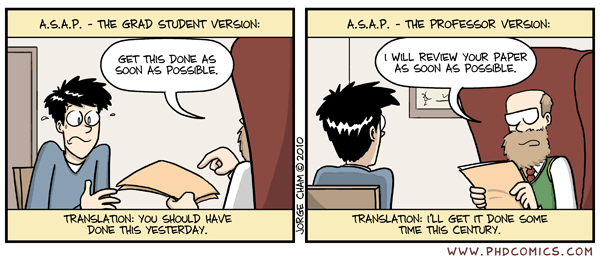
Related to that, I may yet get to do a small project on LCA of electric driving proposed earlier with TNO. This would mean doing a fifth article with STS. Initial discussions over that took place on august 18th, and there was little movement since. But André called TNO for a last ditch attempt, got through, and negotiated a possible deal in five minutes. Go figure..
A fifth article would have consequences for my Ph.D. defence date. I was aiming for early june, but if I now get a 4 month research contract, the whole thing carry over the summer, with a defence projected in october. While I will be very glad to have a salary again, the job is very temporary, and I am quite frustrated with another extension of the big thesis project. I just want it to be finished now. I tried to convince Wim to keep that fifth article out of my thesis, but he resisted and I have little bargaining power.
Meanwhile, Terhi has started a campaign to convince me that I would really like to live in Finland. She obviously hasn't fully realised that I would follow her to the ends of the earth. Even to some place as remote as Helsinki, Finland..
Update: a pleasantly barbed Ph.D. comic came out on this subject.
Tuesday, 5 January 2010
Tango Taboe camp V
It was the fifth camp, but for my darling Terhi it would be the first. I picked her up from Schiphol on Boxing Day after a nice and relaxing Xmas with my family.
Jeroen graciously gave us a lift to Austerlitz, where we settled into an empty dorm. Unfortunately, our privacy did not last, but we got along reasonably well with our diverse and growing selection of roommates.
Dancing started out somewhat gingerly. We were both nervous, for different reasons. Terhi rapidly improved her skills and her feeling for tango music, and I relaxed and found my flow and rhythm. After a tuesday low, the rest of the camp was excellent.
By day, I did workshops on sacadas, boleos, slides and musicality, with Terhi, Jipke and Karin. We also had lovely afternoon cafe sessions with amateur DJs and live music on two occasions.
New year's eve was lovely, though we missed the dancing revolution by calling it a night at a quarter past two. Chacarera is just not my thing, though the resulting chaos on the slippery floot was amusing to watch.
New year's day was even nicer. My mother and brother came to pick us up for dinner, and surprised us by coming early and joining a workshop. Luckily, it was a basic workshop with very little actual dancing. We had an excellent dinner in Zeist at Troya though Terhi and myself were pretty sleepy throughout.
We found energy after we got back and greatly enjoyed the last night. I danced with Terhi, Siobhan and Christiane among others, and we greatly enjoyed the performances that small groups of people had been preparing through the week.
Late that night, Jeroen was kind enough to give us a lift back home. We needed the next two days to recuperate slightly and have some times for each other (we slept 14 hours straight from saturday to sunday).
Overall the camp was another great succes. Terhi and I already booked a short visit to tangomango in februari.
Thursday, 24 December 2009
Happy holidays
The snow has largely melted, leaving the roads full of slush and even more slippery re-frozen surfaces. The university was practically empty this week, and stores weren't very crowded as far as I could tell.
TV has also started the usual full-spectrum assault of christmas movies, one more cheesy after the other. I watched Capra's 1946 classic, It's a Wonderful Life, on TV on sunday and called it quits after that. If you must give in, I suggest watching Bad Santa, though you may always be reminded of it when you stumble on a rerun of Gilmore Girls.
I hope everyone reaches their loved ones this year, and that you have a lovely and relaxing time when you get there.
Monday, 21 December 2009
Winter wonder land
 Most of Europe has been in a cold spell of late, and it has been terribly disruptive. For my area, it started on thursday, just as I was seeing off my darling Terhi at Schiphol airport.
We got there without problem, but I had to wait for an hour to get a train to leave the airport, and took another hour to get to Utrecht via Hilversum. Still, I was luckier than some others.
About a foot of snow accumulated on my balcony on Sunday. I cannot remember this ever happening before. I tried to use my bicycle to get around, but got stuck up to my axles in the snow in some places and had to resort to using the car lanes. Which was fine, because the cars were not driving so fast either.
A multitude of snow men had been spontaneously created, and groups of kids having snow ball fights everywhere. Nearly everyone was smiling. Under the orange street lights, it all looked very lovely.
However, I hope that buses, trains and airplanes return to full service by Christmas, as I will have to travel to my mother and back to Schiphol again. At least Finns know how to deal with snow and freezing temperature, so I assume that flights out of Helsinki fly perfectly normally.
Sunday, 20 December 2009
Kopenhagen post mortem
 It was not a surprise that talk would be difficult. It was not at all a surprise that talks spilled over into the weekend, as they always do at COP meetings. Nor was it a surprise that in the last two days, a small number of major countries were invited to make the deal behind closed doors. After all, this is exactly how the Kyoto Protocol can into being, and how things have gone at every COP meeting since..
COP meetings start out with a low level segment that are officially meetings of the subsidiary bodies of the UNFCCC, the SBSTA and SBI. Their deliberations are then forwarded to the actual COP, which is the second week, and for which ministers eventually arrive. This is the high-level segment. For the first time we now also had a summit-level mini-segment when heads of state conferred.
What was surprising to me was the G77/China. For many years, they have had similar interests, that is to say, to get technology and adaptation assistance from rich countries. However, those interests have slowly diverged:
Small island nations and least developed countries are looking for tougher temperature targets and more money. Meanwhile, China (and others, like Brazil) have grown a significant industrial base and are now reluctant to commit to any sort of reduction themselves. China in particular is now on track (though it will take many years yet) to surpass some of the rich countries in per capita emissions. Certainly, China's building of two coal-fired powerplants per week is not helping the climate, even if they provide much needed electricity.
In hindsight, a split became inevitable.
The sticking points seems to have been the usual suspects:
- Binding emissions ceilings
- Technology transfer for mitigation
- Reduction of deforestation and land degradation (REDD)
- Financing for adaptation
There was lots of positioning, as usual. Main intransigents, as usual were the USA and China, though both moved a little by agreeing to throw money at developing countries and by agreeing to international verification of emissions cuts, respectively. In the end, the familiar big countries were called in by the Danish hosts to make a deal in the new top-level segment. But then the US, China, India, Brazil and South Africa made a separate deal, and upended the whole process.
Naturally, everyone was furious. The Europeans sort of saved things by not rebelling against a deal that was far below what they wanted and made without their input. Countries started to fall into line as usual.
And then Tuvalu balked because the accord would not save their country from the rising waves.
Bolivia, Venezuela, Cuba, Sudan and Saudi Arabia joined the rebuttal but it is not hard to see why. Saudi Arabia has been a regular recipient of the Fossil of the Day award, and opens each COP with a statement that countries should be compensated for any lost income from a switch away from fossil fuels. No surprise there. Sudan, this year's plenary representative for the G77, was not included in either set of the final negotiations and it is not playing ball internationally anyway. Again, no surprise. As for the Latin American countries, I suppose they liked neither the process, nor the meagre outcome.
Personally, I think it somewhat logical that the UNFCCC process was being bypassed. The Kyoto Protocol helped focus minds and policy in Japan and the EU, but it was never solid enough. The EU had a head start because emissions from Eastern Europe have reduced drastically since 1990 (the benchmark year). And the only reason why we may still meet our Kyoto targets is because of the financial crises and resulting economic downturn. There are no penalties if we do fail to meet our targets. So while Kyoto has been a soft success, it was a hard failure.
In the end, I believe that the Kopenhagen Accords were what Barack Obama needed domestically. He needs to sell a lightweight climate deal to the US Senate for political reasons. Hopefully, the USA can move forward after that. China was as noncommittal as it could get away with, especially considering that the Chinese government has $2 trillion in currency reserves that could be mobilised to acquire green technology.
I think negotiators should look to equal per-capita emissions as a future target. Perhaps China can then be enticed to some sort of deal where they improve efficiency so much that their per capita emissions stay between the equal-per-capita and what developed countries are emitting per capita (which should be decreasing over time).
I still hope that emissions reductions will happen, but at the moment the driving force seems to be high prices of fossil energy resources, rather than binding international obligations. We still need the COP meetings (and the IPCC) to provide a focal point for climate science and climate talks, but the real deals will probably be made on the side.
For other views on the Kopenhagen climate summit, there are many commentaries around the web, opinions and observations from politicians, and the blog posts of my colleague Pita Verweij, who was part of the Dutch delegation to COP15.
Wednesday, 9 December 2009
Kopenhagen climate summit
The Kopenhagen climate change summit is underway. Officially known as the 15th conference of the Parties to the Framework Convention on Climate Change and 5th conference of the Members of the Kyoto Protocol, the events is a circus with some 15000 performers.I have some idea of what it is like because I spent quite a lot of time at COP6a in The Hague, back in 2000. Astute observers will notice that quite a few topics remain nearly as unsolved as they did back then.
For everyone who is not up to speed with the IPCC's 4th assessment report, the BBC have made a fine presentation explaining the basics. Coverage is pretty wide, also in newspapers such has The Guardian and the Volkskrant, though the latter still has the coverage in the science section, rather than the politics section where it belongs.
So far, the conference is warming up as nicely as the climate. Particularly sad is the (usual) interference of the Danish police in NGO protest activities. Even if a small subsection of activists were planning acts of civil disobedience, the suits can do with some fresh off-the-street heckling after sitting in meetings rooms for days. Blanket treatment of environmental NGOs as a menace is only going to radicalise more them (that applies to every diverse group, not just Muslims).
I still keep my fingers crossed and hope there will not be too many fireworks inside or outside the conference. For those looking to play a slightly more active role (or get informed), there is a national climate event in Utrecht this saturday. Some of my senior colleagues will be taking part.
Thursday, 3 December 2009
Methyl isocyanate and the evil corporation
Today is the 25th anniversary of the worst chemical industry disaster ever. Or more accurately, the most deadly case ever of criminal neglect of safety rules.
H3C-N=C=O is a fairly simple chemical, and an intermediate in the production of many pesticides and adhesives. It is also exceedingly toxic. It reacts quickly in water, attacking any moist body surfaces, such as airways, eyes and lungs. It can kill in concentrations as low as 21 ppm, and MIC poisoning is not a nice way to go.
An American chemical company by the name of Union Carbide produced vast quantities of the stuff at one of its plants in Bhopal, India. And had neglected to maintain (or pay for) safety measures on the site. And on december 3rd, 1984, water got into a tank holding 42 tonnes of MIC. Temperature rose quickly, and the tank burst, sending a toxic gas cloud into the adjacent slums and nearby town.
2000 people died that night. Another 6000 died within the next two days and nights. In the aftermath, tens of thousand more people died from MIC poisoning, and the area is said to have uncommonly high rates of cancer, birth defects and stunted growth.
Nobody has ever stood trial for that disaster, or the aftermath. Union Carbide became a subsidiary of Dow Chemical, while Union Carbide India was sold and is now Eveready Industries. A settlement for compensating the 570.000 victims was reached, but most of the money has not been paid out so far. The companies involved state they have absolved themselves of any further responsibility.
On the 20th anniversary of this disaster, one of the Yes Men posed as spokesman for Dow Chemical and announced on the BBC that the company would set aside a $12 billion fund for the victims and proper cleanup. The news was widely carried and Dow praised for it, until they announced that they weren't going to pay a dime..
The Bhopal and Chernobyl disasters were defining events in my attitude towards safety and the need for proper enforcement of safety standards. Furthermore, I became acutely aware of the dark side of industry and technology. Even though my father worked at Dupont de Nemours and Company plant in Dordrecht where safety was paramount, I never had the same trust in the chemical industry again.
It is shocking to see that so many years later, neither the Bhopal nor the Chernobyl plant has been properly cleaned up. It also weird for me to now have taught students who were not even alive when either disaster happened, have no memory of an industrial disaster on such scale, and seem much more indifferent to these issues.
Wednesday, 2 December 2009
Draft 4th article finished
I just spent the last 15 hours working on my fourth article. This includes breaks for eating, reading the news and thinking of Terhi, but I skipped kempo training to make it happen.
And I finished it. I am very happy and very satisfied. Tomorrow I can print it and correct the inevitable mass of broken sentences, but the content is there. Now I will sleep..

And I finished it. I am very happy and very satisfied. Tomorrow I can print it and correct the inevitable mass of broken sentences, but the content is there. Now I will sleep..
Monday, 23 November 2009
More Terhi
My darling saw fit to visit me again this weekend. We had some plans to go into town and visit some artists' studios, but ended up lounging about my apartment, spending time in each other's arms.
We seem to turn each other into giddy teenagers, save for the insecurity and emotional ineptitude. I literally have yet to find anything about her that I do not like (other than that she lives too far away).
I am also very impressed that she is taking up tango, making fast progress. She even has the raw courage to go with me to the Taboe winter camp. I will reciprocate by going with her to Finland in (late) spring. And there's a vacancy for a lecturer on sustainable energy and climate change mitigation at her university..
Addendum: If anyone knows of a decent, affordable hotel in Paris for the end of January, please let me know. Same goes for restaurants.
Monday, 16 November 2009
Waiting
I am waiting for a lot of things that I have sent out to get back to me:
2 articles are with journal editors, presumably under review
1 article and a thesis intro are with my promotors
7 job applications are somewhere on the minds and/or desks of prospective employers
Not to mention that Terhi isn't coming until friday..
So while I mull over job applications 8 and 9, as well as the results chapter of the thesis, I am feeling like my attention span is being stretched thin. Of course, last time I was looking for a job, it took only 72 applications to find something semi-permanent...
Sunday, 15 November 2009
Rosa, the Ashton Brothers and the Nederlands Blazers Ensemble
I had a fairly quiet weekend, mostly occupied by sleep and drinking tea and finishing chores around the apartment. The november gloom and rain tend to drive me indoors. On sunday, Renée, Casper and Annemarie came up Utrecht for a an evening of entertainment.
We had dinner at Rosa's Kitchen. This small restaurant is the only one in my district, but it has a decent reputation. For myself, I was a little disappointed by the overabundance of cheese: every vegetarian option had Parmesan cheese except the deserts. The others were quite happy with their choices, especially my mother with her Red Snapper dish. The service was pretty good and friendly, and managed to avoid nearly all of the 100 things restaurant staffers should never do.
After dinner we set out to Vredenburg Leidsche Rijn (the big red box) to see the Ashton Brothers & Nederlands Blazers Ensemble take on Shakespeare's Midsummer Night's Dream. It was not your average Shakespeare rendition: They spoke Puck's opening and closing monologues, but the rest was more of a collection of musical sketches inspired by Midsummer Night's Dream than a play.
There was music, slapstick, acrobatics and theatre, and all of it really well done. The musicians were not quite so used to doing comedic theatre but they they took to it with gusto and smiles. The music bounced from Mendelssohn to twenties jazz to German schlager (briefly, thankfully). The show may not have pleased all the critics, but I've read Midsummer Night's Dream, seen the film and seen the play performed normally. A derivative work was all the more refreshing.
Tuesday, 10 November 2009
Has GDP outlived its usefulness?
Gross Domestic Product measures economic transactions. It is also used as a proxy indicator for how industrious we are. It has long been used as a measure of added value, the result of someone successfully making a product and selling it for more than the cost of the parts, or of someone performing a tangible service. And we all want GDP growth because it means we as a society have more money to pursue whatever private or public goals we have.
GDP has long been criticised as being the wrong indicator. Critics say it does not include the side effects of these economic actions, or that we should focus instead on utility. The former king of Bhutan introduced the Gross National Happiness to account for this.
However, critics have failed to impress economists or policymakers and GDP has stood for decades as the prime measure of how well a country is doing in the race among nations.
Lately, I wonder if GDP still measures what it used to. Two developments seem to have changed the nature of what GDP actually measures:
The first is the digital age. It is now possible to make something once (i.e. music) and sell it with the tiniest amount of added effort. This was already somewhat true for industries like pharmaceuticals and music but the internet has accelerated this. As a result, more economic transactions barely require any more investment or work force.
The second is the financial services ballooning into a much larger part of the economy. Finance is now a significant part of GDP in some important economies, such as Britain, United States and even The Netherlands. But the value created is ephemeral, based purely on perception and therefore prone to disappearing with a gloomy outlook or reappearing if the mood changes in the City or on Wall Street.
Therefore, while GDP still measures economic transactions, it no longer seems useful as a proxy indicator even for created economic value, much less mental or physical activity, or employment. Hence, I expect an increasing mismatch between the official definition of a recession (2 quarters of consecutive shrinking GDP) and the experience of the people living in these economies.
Monday, 9 November 2009
Irgendwann fällt jede Mauer
For those who do not read German, the quote means "Eventually every wall falls" and it was once spray-painted on a section of the Berlin Wall. It is twenty years ago today that, after the simmering summer of 1989, we sat glued to the TV set with live images from the newly defunct Wall.
I grew up with explanations of a death zone with mines and automated machine guns and guard towers. To me, Eastern Europe was like a giant concentration camp where people were squeezed rather than butchered. I know my parents visited Bulgaria for vacation, and we had house guests from Yugoslavia at some point, but it was otherwise a section of the globe that was closed and scary. This was back in the Cold War, when a devastating global war not the remote and academic possibility it is now.
Yet we saw this monolithic institution crumble before our eyes. People cheering on top of the concrete, taking hammers to it. Border guards, known for shooting on sight, just standing to the sides looking bemused at their obsolesce. Journalists trying to convey the symbolism and the political repercussions.
Like the Berliners themselves, we all went to sleep thinking it was a dream and we would wake up again in a world divided. But we didn't and we woke up in a new world instead..
Sunday, 8 November 2009
Terhi
Ludwig Wittgenstein famously said: "Of which one cannot speak, one must remain silent." In this case, I wonder where to start.
The story started at the ESSA conference. At the reception, I met a Finnish lady and she asked to interview me about communication and collaboration between scientists. We had the interview and I ran into her again several times over the conference. We chatted a bit and while I thought she was fairly charming, I promptly filed it under observations that would never see any followup. At the time I was a rather taken with a Russian lady I had met in London the weekend before, and thought that Terhi had a boyfriend anyway.
But the week after I returned, she ventured an email to thank me for the interview. This quickly snowballed into long pages of text exchanged on a daily basis, and Skype calls between Guildford and Utrecht. We obviously meshed extremely well on-line, but whether we would match well in person became a scary open question.
Terhi was due to go to Brussels for a meeting on thursday, November 5th, and suggested she would come and visit afterwards. In the four weeks remaining before our big date, we both spent a lot of effort preparing for each other. Then on tuesday, I found out the Belgian train staff would be on strike on thursday.
 Rather than let her spend another night away from me, we decided that her project should rent a car so that I could pick up her and two project partners and bring them to NL. It was cheaper than hotels and we would not have to postpone our meeting. I ended up driving to Brussels in a well-equipped but ugly Lancia and returning with my lady via Delft to Utrecht.
To make a long story short and keep it private: I spent the weekend in bliss. Everything went well, and my new girlfriend even had the guts to go to a tango party with me. The only downside was that I had to put her on a train back to the UK on sunday. Our parents are now informed, so we are officially off the singles list.
The story started at the ESSA conference. At the reception, I met a Finnish lady and she asked to interview me about communication and collaboration between scientists. We had the interview and I ran into her again several times over the conference. We chatted a bit and while I thought she was fairly charming, I promptly filed it under observations that would never see any followup. At the time I was a rather taken with a Russian lady I had met in London the weekend before, and thought that Terhi had a boyfriend anyway.
But the week after I returned, she ventured an email to thank me for the interview. This quickly snowballed into long pages of text exchanged on a daily basis, and Skype calls between Guildford and Utrecht. We obviously meshed extremely well on-line, but whether we would match well in person became a scary open question.
Terhi was due to go to Brussels for a meeting on thursday, November 5th, and suggested she would come and visit afterwards. In the four weeks remaining before our big date, we both spent a lot of effort preparing for each other. Then on tuesday, I found out the Belgian train staff would be on strike on thursday.
Rather than let her spend another night away from me, we decided that her project should rent a car so that I could pick up her and two project partners and bring them to NL. It was cheaper than hotels and we would not have to postpone our meeting. I ended up driving to Brussels in a well-equipped but ugly Lancia and returning with my lady via Delft to Utrecht.To make a long story short and keep it private: I spent the weekend in bliss. Everything went well, and my new girlfriend even had the guts to go to a tango party with me. The only downside was that I had to put her on a train back to the UK on sunday. Our parents are now informed, so we are officially off the singles list.
Tuesday, 27 October 2009
Young Energy Specialists and Development Cooperation
YES-DC is a small NGO of people in my field. It has been going on for 15 years. I used to go quite often to YES-DC events, but most of their events are on tuesday- and wednesday evenings, and I tend to fill these with tango and kempo nowadays. Fortunately, the board decided to celebrate this lustrum on friday with a dinner and drinks session for all of the current and former members.
It was nice to see some of the people who have been sending me lots of e-mail through the years. A surprisingly large number of them work in commercial enterprises rather than the government or research institutes one might expect. I also got two suggestions for job openings.
It was nice to see some of the people who have been sending me lots of e-mail through the years. A surprisingly large number of them work in commercial enterprises rather than the government or research institutes one might expect. I also got two suggestions for job openings.
Monday, 19 October 2009
Out and about
Nelleke had her birthday this weekend, and she took us all for a refreshing walk into the woods south of Amersfoort. We started at her place with some tea and sumptuous chocolate cake, and then we walked down to Den Treek and back. We enjoyed pretty autumn colours, lots of sunshine and some nice conversations. We got very lucky with the weather, and only had a five minute spell of light rain, which was compensated by a rainbow.
I always notice the difference in my lungs when I get back from the woods into the city, and notice how dirty the air in Utrecht actually is. This is apparently shared by many people, as researchers from the VU in Amsterdam found significant health benefits from living close to green spaces. The effect is most significant for depression and anxiety and strongest in children. Which lands me the first compelling reason to ever move to suburbia.
Unfortunately, the bees that help reproduce all the pretty flowers (and important food crops) are under threat. Colony Collapse Disorder has now been linked to modern neonicotine pesticides (derivatives of the addictive agent in tobacco). Details are available at the university website, but the summary is that bees suffer even more from second-hand tobacco than humans. There's also a petition to urge our agriculture politicians to tighten standards and properly implements the ones that already exist.
Monday, 12 October 2009
Parkheuvel **
I am merrily dozing off in the train on the way home from the annual shareholder meeting of my mother's store. My brother and myself are minority shareholders, and therefore a meeting must be convened to approve the annual report. For us, it is a perfect excuse to go for dinner at a very nice restaurant once per year, on the company's payroll.
This year, we took an alternative approach and discussed the report over lunch at the restaurant Parkheuvel. The establishment has two stars from the Michelin Guide, which gave us particularly high expectations.
And those expectations were met. We gave the chef quite free reign (vegetarian for me, no fish for my brother, anything else goes). I had a lovely starter made of salsify and potatoes, a main course of green asparagus and mushrooms, and crème brulée and rum ice cream for desert. Casper and Renée had a sublime deer for main course (it is autumn after all). The wine arrangement was equally brilliant. Unfortunately we all had things to do in the afternoon, so we limited ourselves to half glasses.
Combined with very agreeable service, we had two increasingly cheerful hours.
Friday, 9 October 2009
Heat
Not much of that in my appartement over the last two weeks, because the district heating system for the whole building was drained to perform maintenance. It wasn't so bad this week, but last week my home felt pretty cold.
They changed my valves to thermostat ones, and also made two of them so that I can replace the radiators without having to disconnect the heating to half the building. I also replaced the radiator I use most with a more efficient one.
And now this Friday the whole thing went live. And only a few drops from the replaced radiator, so I trust the young man who installed it can fix it quickly.
Friday, 2 October 2009
And now for something completely different...
It is awards season. We had the Emmys already, and now the annual Ig Nobel Prizes are upon us. Awarded ahead of the Nobel Prizes, these awards honour scientists doing the ludicrous and the useless.
Less farcical, and also very enjoyable, is the new on-line lecture series Justice with Michael Sandel from Harvard University. It is a course designed to make people think about justice, and not so much to promote a specific philosophy of justice. Somewhat geared towards the US context, Sandel starts out discussing Utilitarianism and Libertarianism, involving his student audience by presenting them with tricky series of ethical dilemma's. Later on the 12-hour series, Locke, Kant, Rawls and Aristotle join the fray.
Less farcical, and also very enjoyable, is the new on-line lecture series Justice with Michael Sandel from Harvard University. It is a course designed to make people think about justice, and not so much to promote a specific philosophy of justice. Somewhat geared towards the US context, Sandel starts out discussing Utilitarianism and Libertarianism, involving his student audience by presenting them with tricky series of ethical dilemma's. Later on the 12-hour series, Locke, Kant, Rawls and Aristotle join the fray.
Tuesday, 29 September 2009
The New Cool Cat
 I installed Mac OS X 10.6 Snow Leopard today. I haven't noticed a lot of difference yet. There's lots of small practical new features but it is mostly the OS I know and like working on. Speed also seems pretty similar. More information can be found in a very detailed review at Ars Technica.
The update took more time than I expected, but it freed up some 8 GB (!) on my hard drive. Nearly everything was working fine out of the box, and the only painful part was getting my personal wiki server back up to work. This may sound trivial, but that server holds my personal recipe book and other vital texts.
I made things harder on myself by forgetting to copy down a piece of the configuration guide I had written in my wiki after the update to OS X 10.5. After installing the latest MySQL database (5.1.39) and Mediawiki (1.15.1) servers, and importing an SQL backup of the Wiki tables, I fortunately got the whole thing up and running again.
Update: The wiki required some additional cleaning in the database. I have also noticed that menus and some of the other user interface elements are much snappier on Snow Leopard than they were on Leopard.
Subscribe to:
Posts (Atom)